Summary:
You’ve probably spent hours scrolling through venue photos — sun-drenched garden ceremonies, exposed brick loft spaces, candlelit barn receptions. They all look incredible. The problem is, a photo doesn’t tell you what happens when it rains, what the vendor restrictions actually cost you, or whether your grandmother can get through the door. For couples planning a wedding in New York County, the venue decision carries a lot of weight — logistically, financially, and emotionally. This post is here to help you think it through clearly, starting with the option most couples consider first: the garden wedding.
Garden Wedding Venues: Beautiful in Photos, Complicated in Practice
There’s a reason garden venues fill up every Pinterest board. The natural light, the greenery, the open sky — it all photographs beautifully. And for couples who genuinely love the outdoors, that setting can feel meaningful in a way a ballroom never could.
But here’s what doesn’t make it into the photos: the tent rental you needed because May turned out to be a rainy month, the generator you had to source because the garden didn’t have enough power, or the guests who spent the cocktail hour swatting mosquitoes in July heat. New York County averages around 46 inches of rain per year, spread pretty evenly across all twelve months. There’s no truly safe outdoor wedding window here.
What Does a Garden Wedding Actually Cost Once You Add Everything Up?
The base rental for a garden venue might look reasonable at first glance. But outdoor weddings carry a long list of add-ons that indoor venues simply don’t require, and they add up fast.
Tent rental alone — if the venue even allows it — can run anywhere from $1,500 to $5,000 depending on size and style. If the site doesn’t have built-in power, a generator rental is another line item. Portable restrooms, outdoor lighting, space heaters for a cool October evening, industrial fans for a humid August afternoon — none of that is free. Some couples also end up paying for weather insurance, which exists specifically because outdoor events in the Northeast are unpredictable enough that insurers built a product around the risk.
By the time you’ve covered the essentials, a garden venue that seemed budget-friendly can easily cost more than a fully equipped indoor space. And that’s before you’ve touched catering, flowers, or a DJ.
There’s also the comfort factor, which is easy to underestimate when you’re planning months in advance. Guests in formal attire standing on uneven grass in 85-degree heat with 80% humidity — which is a realistic New York County July scenario — are not comfortable guests. And uncomfortable guests leave early, which changes the energy of the whole night.
For couples who have their hearts set on greenery and natural settings, some venues do offer the best of both worlds: indoor spaces with garden access, or climate-controlled rooms with large windows and natural light. But if you’re choosing a standalone outdoor garden venue in New York County, go in with clear eyes about what the weather can and will do to your plans.
Backyard Wedding Venues: Is the DIY Route Actually Cheaper?
A lot of couples consider the backyard option — a family home, a parent’s property, somewhere with sentimental value. On the surface, it seems like the most affordable path. You’re not paying a venue fee, after all.
In practice, it rarely works out that way. When you’re hosting a wedding on private property, you’re essentially building a temporary event venue from scratch. Tables, chairs, linens, and dinnerware all need to be rented. If there’s no catering kitchen, your caterer may charge extra for a remote setup or bring their own equipment at an added cost. Portable restrooms are often necessary once your guest count passes a certain threshold. Outdoor lighting, a sound system, a tent — all of it falls on you to coordinate and pay for.
Then there are the logistics that people don’t think about until it’s too late. Parking for 80 or 100 guests on a residential street in New York County is genuinely difficult. New York County’s noise ordinances are real and enforced — amplified music outdoors in a residential neighborhood can result in a complaint and a fine before the first dance is over. And if something goes wrong — a vendor no-shows, the tent leaks, the power trips — there’s no on-site venue staff to help you solve it. That responsibility falls on whoever in your family is the most organized, which is not how anyone wants to spend their wedding day.
The honest answer is that backyard weddings can be meaningful and beautiful, but they’re rarely simpler or cheaper than renting a proper venue. When you factor in everything required to make a private property functional for a formal event, a flat-rate venue rental often comes out ahead — both financially and in terms of sanity.
Rustic Wedding Venues and the Case for Urban Industrial Spaces
Rustic venues — barns, farmhouses, converted mills — have a specific appeal. The warmth of aged wood, exposed beams, and natural textures creates an atmosphere that feels personal and unhurried. Couples drawn to that aesthetic usually aren’t chasing a trend; they want their wedding to feel grounded and real, not corporate or generic.
What’s worth knowing is that you don’t have to leave New York County to get that feeling. East Williamsburg and Bushwick have spent the last decade becoming the county’s most visually interesting event corridor, and the industrial architecture there — exposed brick, high ceilings, raw concrete, weathered wood — delivers the same textural warmth as a barn in the Hudson Valley, without the two-hour drive or the weather exposure.
What Makes an Industrial Space Work as a Wedding Venue in New York County?
The short answer: it works because it’s a blank slate. A well-designed industrial space doesn’t impose an aesthetic on your wedding — it gives you a framework to build your own.
That distinction matters more than it might seem. When you book a pre-decorated venue — a garden estate with signature linens, a rustic barn with fixed centerpieces, a hotel ballroom with house lighting — you’re working around someone else’s vision. You can personalize it to a point, but the bones of the space are already telling a story that may or may not be yours.
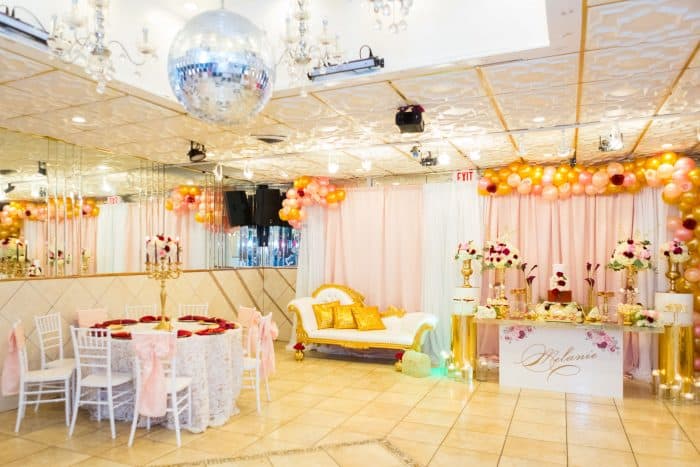
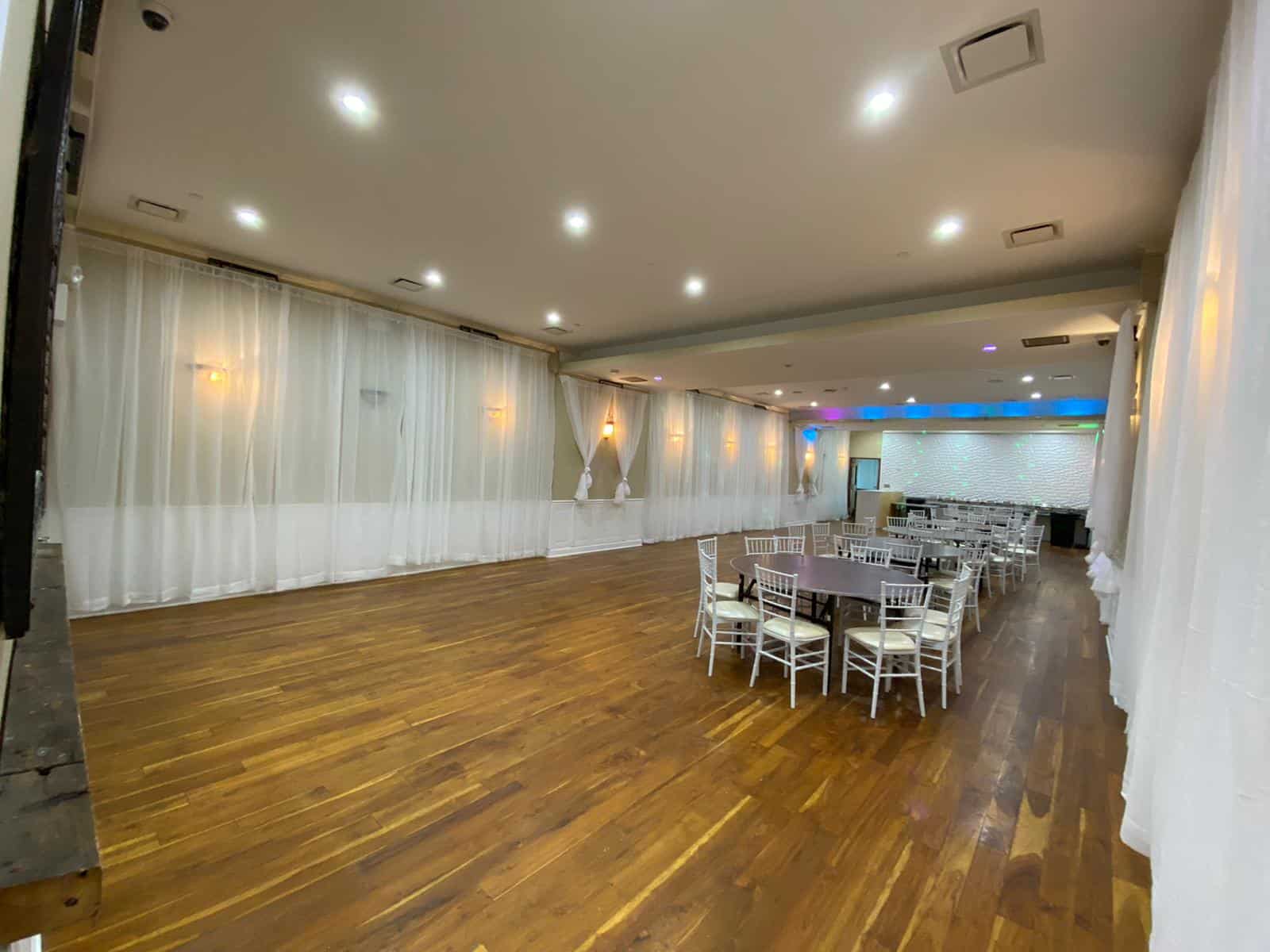
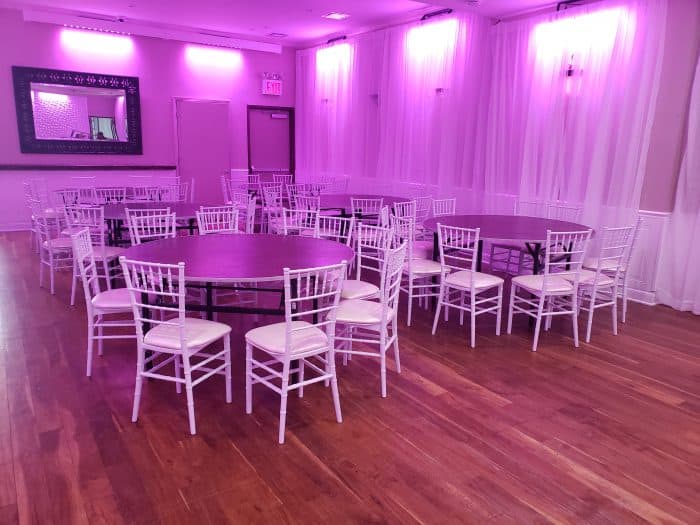
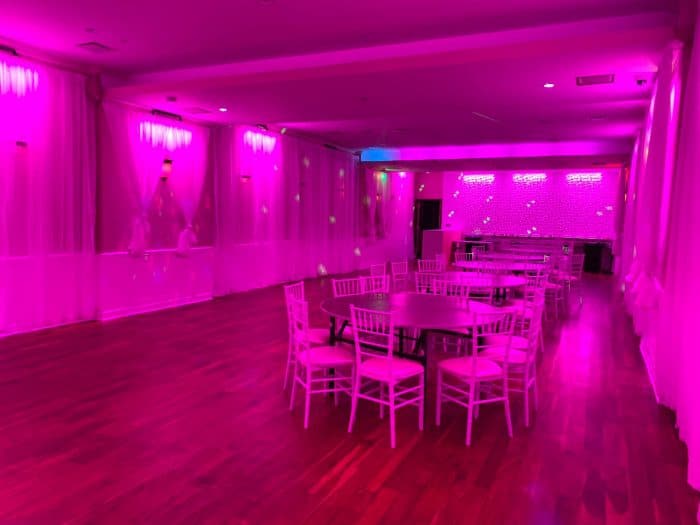
An industrial space with clean lines, open floor plan, and good bones does the opposite. The exposed brick becomes your backdrop for florals. The high ceilings make your lighting installation the focal point. The open floor plan means your layout serves your guest count rather than the other way around. For couples who’ve spent months building a specific visual concept for their wedding, that kind of flexibility isn’t a compromise — it’s the whole point.
From a photography standpoint, industrial venues also tend to produce dramatic, editorial-quality images. The contrast of soft florals against brick, warm candlelight against raw concrete, a white dress against dark wood — these are the kinds of images that look genuinely distinctive rather than interchangeable with every other wedding shot in the same garden or ballroom. Your photographer will have a lot to work with.
And practically speaking, an indoor industrial venue in East Williamsburg means your wedding isn’t subject to noise ordinances, weather forecasts, or the logistical complexity of an outdoor setup. It’s climate-controlled, accessible by the L and J/M/Z trains from across New York County, and designed to host events — not adapted from a space that was originally built for something else.
Unique Wedding Venues in New York County: What to Look For Beyond the Aesthetic
“Unique” gets used loosely in the wedding industry. Every venue markets itself as distinctive. What actually makes a venue stand out — and more importantly, what makes it work for your wedding — comes down to a few concrete factors that photos don’t capture.
Vendor flexibility is one of the biggest. A lot of venues that look interesting from the outside come with mandatory vendor lists that lock you into their preferred caterers, their in-house bar packages, and their approved DJ roster. Those packages are convenient, but they’re priced accordingly. Couples who want to bring in their own caterer — whether that’s a family friend who cooks, a cultural cuisine specialist, or simply a caterer they found and love — often find that unique venues are just as restrictive as traditional ballrooms once you read the contract.
Guest accessibility is another factor that gets overlooked until it’s too late. A beautiful venue in a hard-to-reach part of New York County with no parking and no nearby subway stop creates friction for every single person on your guest list. For families with elderly relatives, guests traveling from Long Island or New Jersey, or anyone with mobility challenges, that friction becomes a real barrier. First-floor, handicap-accessible venues near major transit lines aren’t glamorous selling points, but they matter enormously on the actual day.
Capacity fit is worth thinking about carefully too. A venue that holds 300 people feels cavernous for a 75-person wedding. A space that maxes out at 60 creates stress if your list grows. Finding a venue sized appropriately for your guest count — where the room feels full and alive without being cramped — changes the energy of the whole event.
We’ve been hosting events out of East Williamsburg for years, and the couples who tend to have the best experience are the ones who thought through these practical details early, not just the visual ones. The right wedding reception venue looks great and works well — and in New York County, that combination is more specific than it sounds.
How to Choose the Right Wedding Reception Venue in New York County
Garden venues are genuinely beautiful, and for the right couple in the right climate, they’re a great choice. But in New York County, with its unpredictable weather, strict noise ordinances, and real logistical demands, the “beautiful option” carries a lot of risk that doesn’t show up in the brochure.
An indoor venue — especially one with the character and flexibility of an industrial space in East Williamsburg — gives you creative control, weather certainty, guest accessibility, and room to bring in the vendors you actually want. That’s a combination that’s harder to find than most couples expect when they start looking.
If you’re in the middle of this decision and want to see what the space actually looks like, we’re available to talk through your date and guest count any day of the week. Sometimes the clearest answer is just walking through the door.