
Summary:
You’ve got the date, the guest list, and the vision. The last thing you need is to show up on the day of your event and find another party already in full swing in the hall you booked months ago. It sounds extreme — but it happens, and it happens more often than venues like to admit.
Double bookings, vague contracts, and surprise fees are the most common ways event venue rentals go sideways. This page breaks down how the booking process is supposed to work, what a solid rental agreement actually protects you from, and what to look for when you’re comparing venues in New York County.
Event Room Rental: What the Process Should Actually Look Like
The event room rental process looks simple on the surface — you find a space, you pay, you show up. But the gap between a smooth event and a disaster usually comes down to what happened between the inquiry and the deposit.
A legitimate venue should walk you through availability, give you a clear breakdown of what’s included, and secure your date with a written agreement and a formal deposit — not a verbal confirmation, not a “we’ll hold it for you,” and definitely not a text message. If a venue can’t give you a signed contract and a receipt, your date is not secure, no matter what anyone told you over the phone.
Why Double Bookings Happen — and How to Make Sure It Doesn't Happen to You
Double bookings almost never happen because a venue is dishonest. They happen because the booking system is disorganized. A staff member takes a verbal hold over the phone, forgets to log it, and another staff member rents the same date the next day. Or a venue relies on a shared calendar that isn’t updated in real time. Or someone promises to “pencil you in” while you think about it — and by the time you call back to confirm, someone else has already paid.
The fix is straightforward: a first-come, first-served policy backed by a written contract and a formal deposit. When a venue requires both before marking a date as taken, the system has accountability built in. There’s a paper trail. There’s a financial commitment on both sides. And there’s no ambiguity about who holds that Saturday in July.
This is especially important in a market like New York County, where popular weekend dates fill up months in advance. The demand for event space across the five boroughs is genuinely high — we’re talking about a metro area of eight million people, most of whom can’t host a party of fifty in their apartment. When you’re competing for the same Saturday night as dozens of other families and event planners, a verbal hold is worth nothing.
We secure every booking with a written contract and a deposit before the date is confirmed. We’ve been doing this for over 50 years, and that process has never changed — because it works. Your date is yours when it’s in writing, not a moment before.
We’re also available 365 days a year, which matters more than it might seem. A lot of the booking pressure in New York County concentrates around peak dates — summer weekends, the holiday season, graduation month. When a venue is open every single day of the year with no blackout dates, the calendar breathes a little. You have more options, and so do your guests.
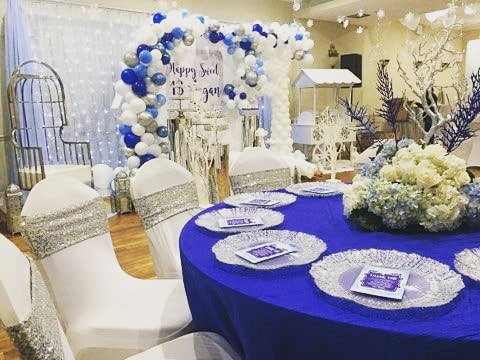
How Far in Advance Should You Book an Event Venue in New York County?
The honest answer depends on the event. A weekday corporate meeting or a small gathering on a Tuesday in February? You might have options with a few weeks’ notice. A Saturday evening in June for a quinceañera, Sweet Sixteen, or wedding reception? Six months out is not too early, and in some cases it’s barely enough.
New York County’s event calendar is relentless. Between cultural celebrations, graduations, holiday parties, and milestone birthdays, the demand for quality event space doesn’t really have an off-season — it just has a slightly slower one. January through March tends to be more flexible, but even then, popular venues fill up faster than most people expect.
The safest approach is to start your venue search as soon as your event date is even loosely decided. You don’t need every detail finalized before you book. You need a date, a rough headcount, and the ability to put down a deposit. Everything else — the decorations, the food, the music — can come together after your venue is locked in.
What you want to avoid is the opposite order: spending weeks planning the details, then discovering your preferred venue is already booked for your date. That’s a frustrating and avoidable situation. Get the venue first. Build the rest of the event around it.
One more thing worth knowing: setup time and event time are not the same thing. At many venues, the clock starts running the moment you arrive with your decorations, which means you’re burning through your rental hours before a single guest walks in. We keep setup time separate from your five-hour rental, so the time you paid for is the time your guests actually experience.
Venue Rental Agreement: What You're Actually Signing
Most people skim a venue rental contract, sign it, and hope for the best. That’s understandable — contracts aren’t exactly a fun read. But the rental agreement is the document that protects you if anything goes wrong, and a few minutes with it before you sign can prevent a lot of problems after.
A solid venue rental agreement should spell out the rental period, what’s included, the deposit amount, the cancellation policy, the maximum occupancy, overtime fees if you run long, and who’s responsible for damages. If any of those things are missing or vague, ask before you sign — not after.
What Should Be Included in a Venue Rental Contract?
The most common source of post-event disputes is a contract that was too vague about what was included. A renter assumes tables and chairs are standard. The venue charges for them as extras. Nobody’s technically lying — but someone’s definitely unhappy.
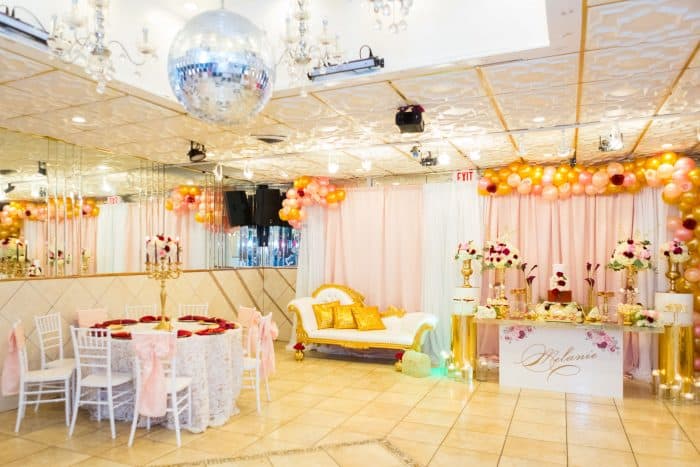
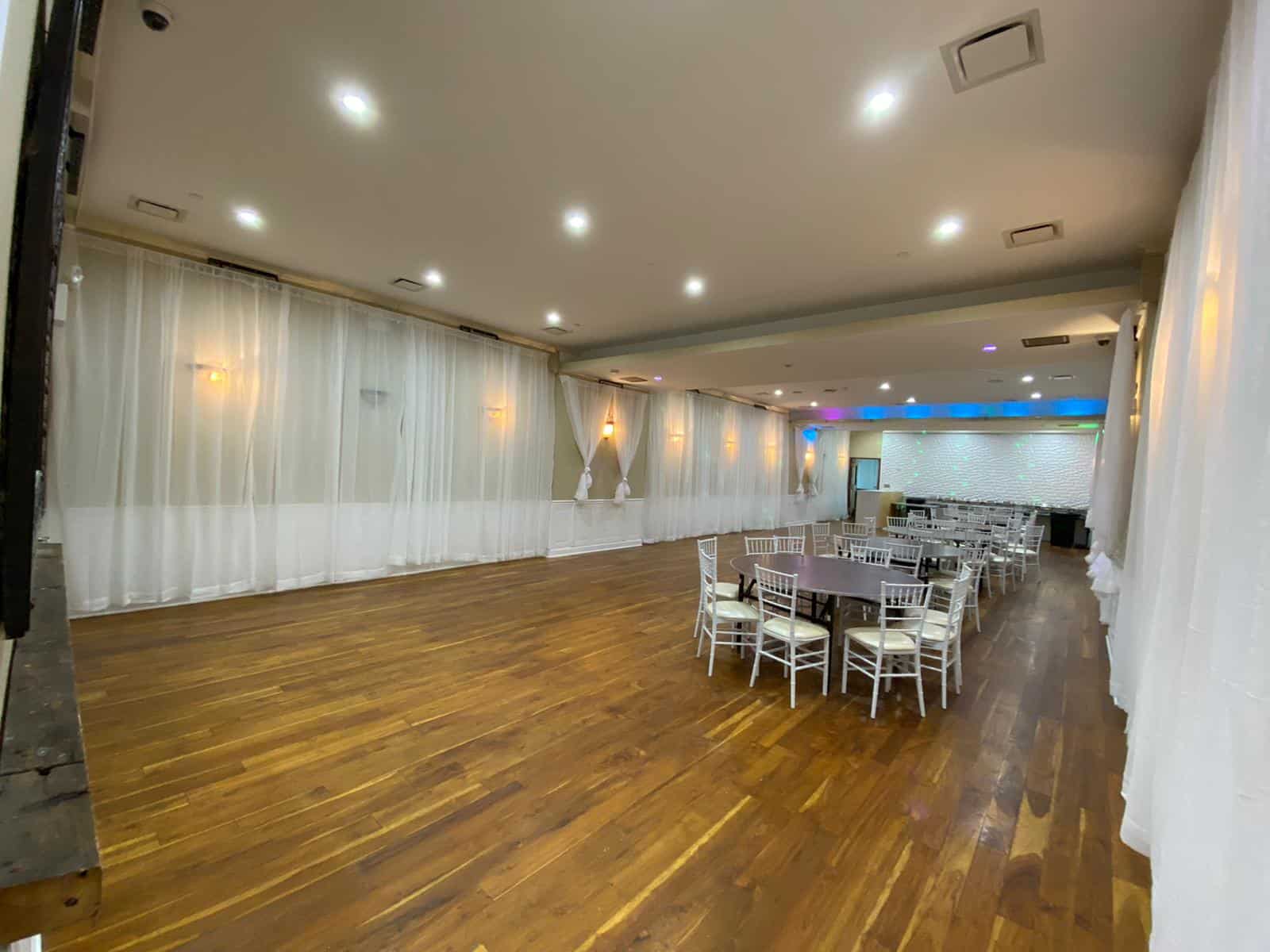
A well-written venue rental contract should clearly list every amenity that’s part of the base rental. Tables and chairs. Lighting. AV equipment. Whether setup time is included or billed separately. Whether you can bring your own food and caterer, or whether you’re required to use the venue’s preferred vendors. What the deposit covers and whether it’s refundable. What the cancellation timeline looks like and what you’d lose at each stage.
The food and vendor question is worth paying particular attention to, especially in New York County, where the event landscape is as culturally diverse as anywhere in the world. A lot of families want to bring their own food — whether that’s because of dietary requirements, cultural traditions, or simply because Aunt Rosa’s pernil is better than anything a catering company is going to deliver. A venue that locks you into a mandatory catering minimum is a real constraint. One that lets you bring your own is a genuine advantage.
Our rental agreement covers all of this clearly. What you’re paying, what’s included, when your time starts, and what happens if plans change. No fine print designed to catch you off guard. If you have questions about anything in the contract before you sign, we’d rather answer them upfront than deal with a misunderstanding later.
The contract also protects you on our side. When a venue is willing to put its policies in writing — including its booking system, its cancellation terms, and its liability coverage — that’s a signal that it takes the business seriously. A venue that operates on handshakes and phone calls is one that can’t be held accountable when things go sideways.

Event Center Rental in New York County: Permits, Insurance, and What You Actually Need to Know
This is the part of event planning that most people don’t think about until someone brings it up — and then suddenly it feels overwhelming. Do you need a permit? Do you need insurance? What happens if the fire marshal shows up?
Here’s the practical reality for most private event rentals in New York County: if you’re hosting a private event inside a licensed venue, you typically don’t need to obtain your own special event permit. The venue’s existing licenses and certificates of occupancy cover the use of the space. What you do need to understand is the venue’s occupancy limit — which should be clearly stated in your rental agreement — and whether the venue carries its own liability insurance.
New York County’s regulatory environment is genuinely complex. Fire codes, noise ordinances, occupancy rules — these aren’t suggestions, and venues that have been operating here for decades know how to navigate them in a way that newer or less established spaces simply don’t. When you rent from a venue with that kind of track record, you’re not just getting a room. You’re getting 50 years of knowing exactly what’s required and making sure it’s in place.
For event hosts in New York County — whether you’re coming from Manhattan, crossing the East River from Queens, or heading in from Long Island — the accessibility of the venue matters as much as the space itself. Our location on the Brooklyn-Queens border puts us within reach of the J, M, Z, and L subway lines, and we’re accessible from the BQE and Jackie Robinson Parkway for guests arriving by car. Ample parking on-site means your guests from Long Island or the outer boroughs aren’t circling the block for forty-five minutes before they even walk in the door.
Manhattan party venues average over $3,000 in minimum event spend. For New York County residents who want a quality space without Manhattan pricing, the short trip to Brooklyn delivers real value — and a venue that’s been part of this community for over 50 years.
How to Book an Event Venue in New York County Without the Stress
The short version: find a venue with a real booking system, get everything in writing, and don’t treat a verbal confirmation as a guarantee. Those three things will protect you from the most common and most painful problems in event venue rental.
Beyond that, look for transparency — in pricing, in the contract, in what’s included. A venue that answers your questions clearly before you book is the same venue that will be easy to work with on the day of your event.
If you’re planning something in New York County and want a space that’s been doing this for over 50 years, we’re available 365 days a year. Call or text us at 718-387-0049, any day of the week between 10am and 8pm, and we’ll walk you through everything.