Summary:
Most people spend weeks finding the right event hall — the right size, the right vibe, the right price. Then the contract arrives, and suddenly it’s a wall of clauses and conditions that nobody explained. That’s where things go sideways.
In New York County, renting an event space involves more moving parts than in most other markets: multiple city agencies, permit requirements that vary by event type, and a venue contract landscape where hidden fees are practically the norm. We’ve spent over 50 years helping families and businesses across the New York area navigate exactly this. Here’s what you actually need to know before you sign anything.
Venue Rental Contract Basics: What Every Renter Should Understand
A venue rental contract isn’t just paperwork — it’s the document that determines what you get, what you’re liable for, and what happens if something goes wrong. Most renters skim it. That’s usually where the regret starts.
The core elements of any solid rental agreement cover payment terms, the security deposit, cancellation and refund policies, what’s included in the rental, vendor rules, and liability. Each of those sections can either protect you or expose you, depending on how they’re written. The contract should answer every practical question you have before your event — not leave you guessing.
Venue Rental Agreement Template: What the Key Clauses Actually Mean
Payment terms are usually the first thing people look at, and they matter. Standard practice in the event industry is a 50% deposit at signing, with the remaining balance due before or on the event date. That’s reasonable. What’s less reasonable — and more common than you’d think — is a contract that buries additional charges in the fine print after you’ve already committed.
Service charges are one of the biggest culprits. At many venues, a mandatory service charge of 20–25% is applied to food and beverage totals, separate from any gratuity. Cleaning fees of $300–$500 or more often appear as a separate line item. Overtime charges kick in if your event runs long — sometimes billed in 30-minute increments at steep rates. By the time you add it all up, the industry average for hidden fees runs 20–40% above the base rental price. That’s not a rounding error. That’s a significant portion of your event budget disappearing into clauses you didn’t read carefully enough.
Security deposits deserve their own attention. Most venues hold $200–$1,000 upfront, refundable only if the space is returned in its original condition. The problem is that “original condition” is often assessed subjectively by the venue after you’ve left. Before your event, document everything — photograph the space, note any existing damage, and make sure your contract specifies the conditions under which your deposit will be returned and the timeline for that return.
Vendor restrictions are another area where contracts can quietly cost you money. Some venues require you to use their approved caterers, DJs, or other service providers — and charge a surcharge of 20% or more if you bring someone outside that list. If you have a caterer you trust or a DJ your family loves, confirm the venue’s vendor policy before you sign, not after.
Force majeure clauses became a major point of conversation after the pandemic, and they’re worth understanding. A well-written force majeure clause should allow postponement without penalty in the event of government restrictions, health crises, or other circumstances genuinely outside anyone’s control. If a contract’s force majeure language is vague or absent, ask about it directly before signing.
Hidden Event Hall Costs That Show Up After You've Already Paid the Deposit
The quoted rental rate is almost never the final number — at least not at venues that aren’t upfront about their full fee structure. Understanding where the extra costs tend to hide gives you the ability to ask the right questions before you’re locked in.
Beyond service charges and cleaning fees, watch for administrative fees (sometimes called “event coordination fees” or “facility fees”), mandatory insurance requirements that aren’t disclosed until after signing, and charges for amenities you assumed were included — things like tables, chairs, linens, lighting, or AV equipment. At some venues, each of those is a separate line item. At others, they’re bundled into the rental. You need to know which situation you’re in before you write a check.
Overtime is one of the most common post-event surprises. If your contract gives you five hours and your event runs six, the overage charge can be significant — sometimes equal to or greater than your hourly rental rate. Build in a realistic buffer when you’re planning your timeline, and confirm in writing what the overtime rate is and how it’s calculated.
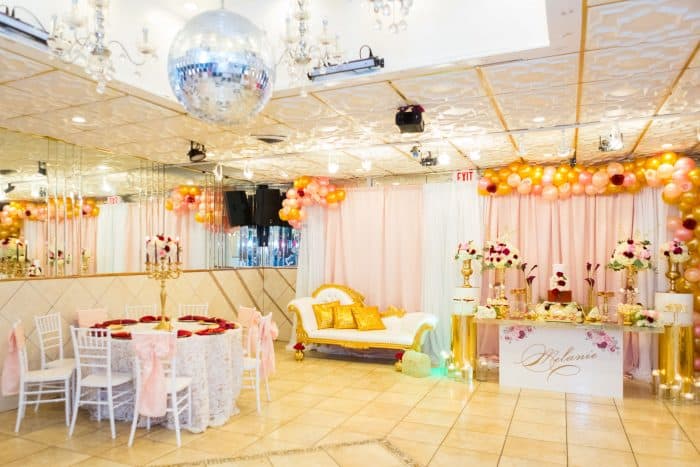
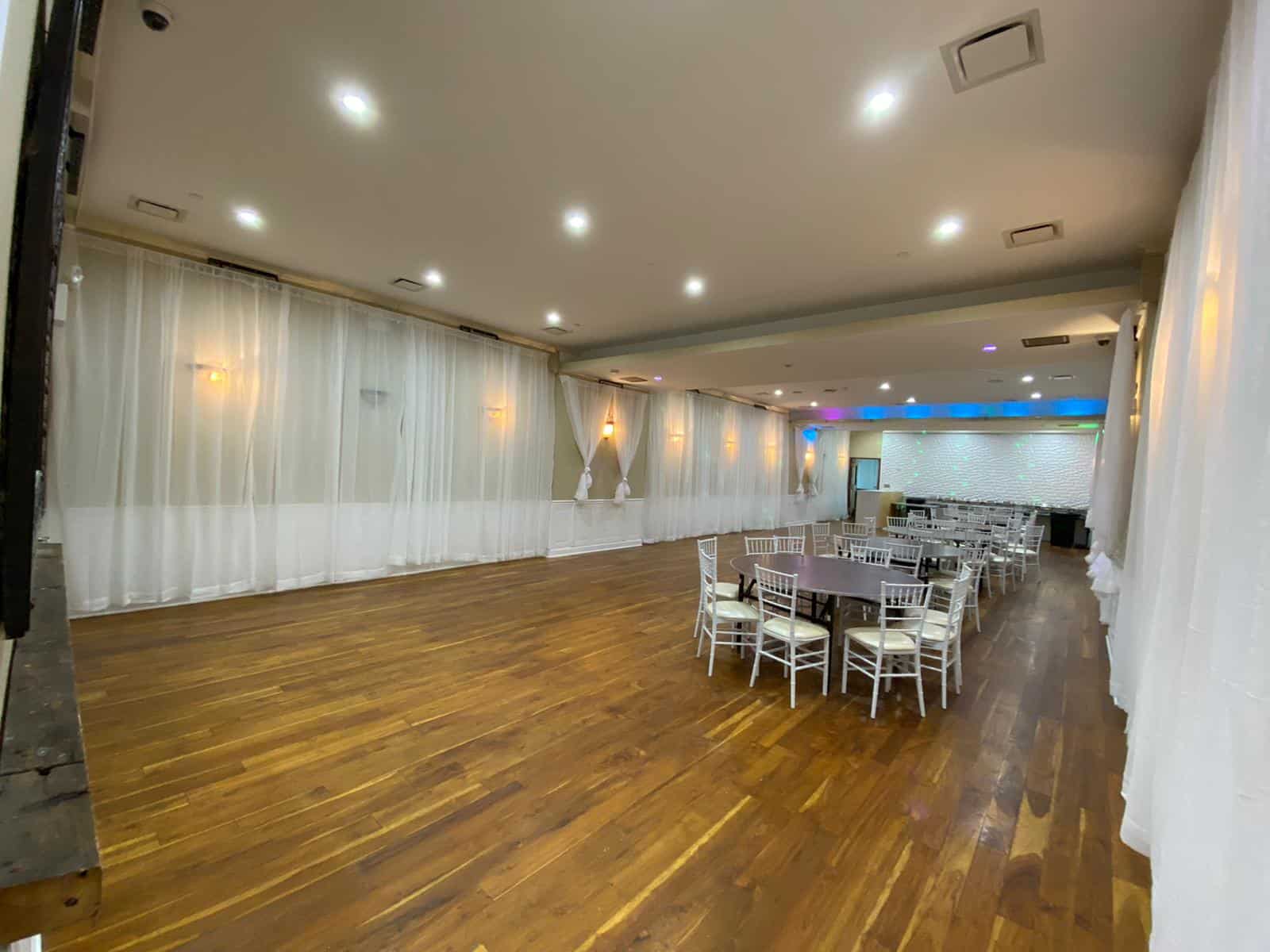
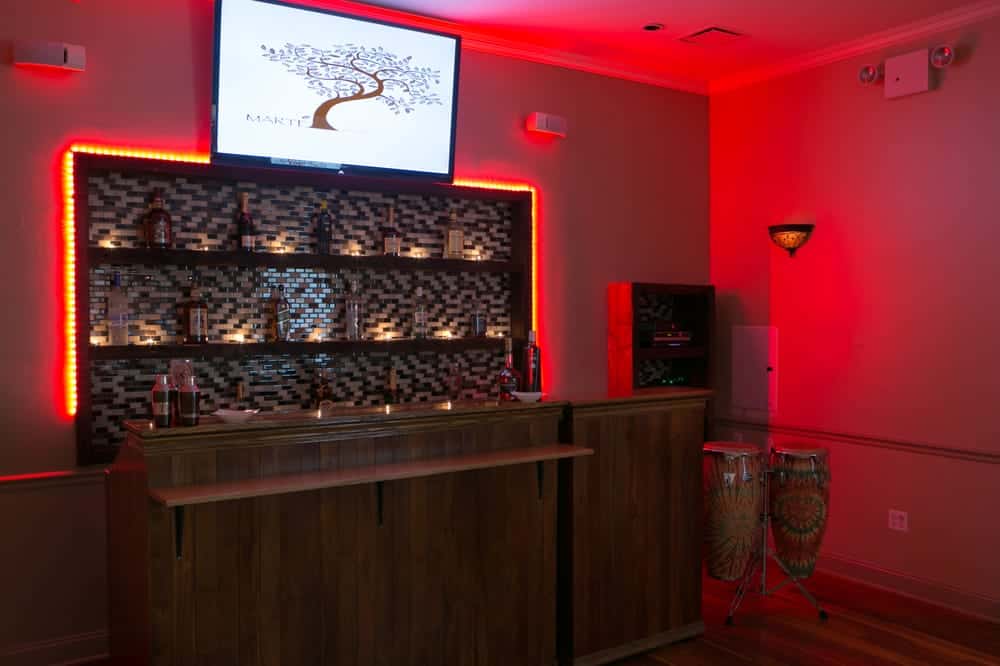
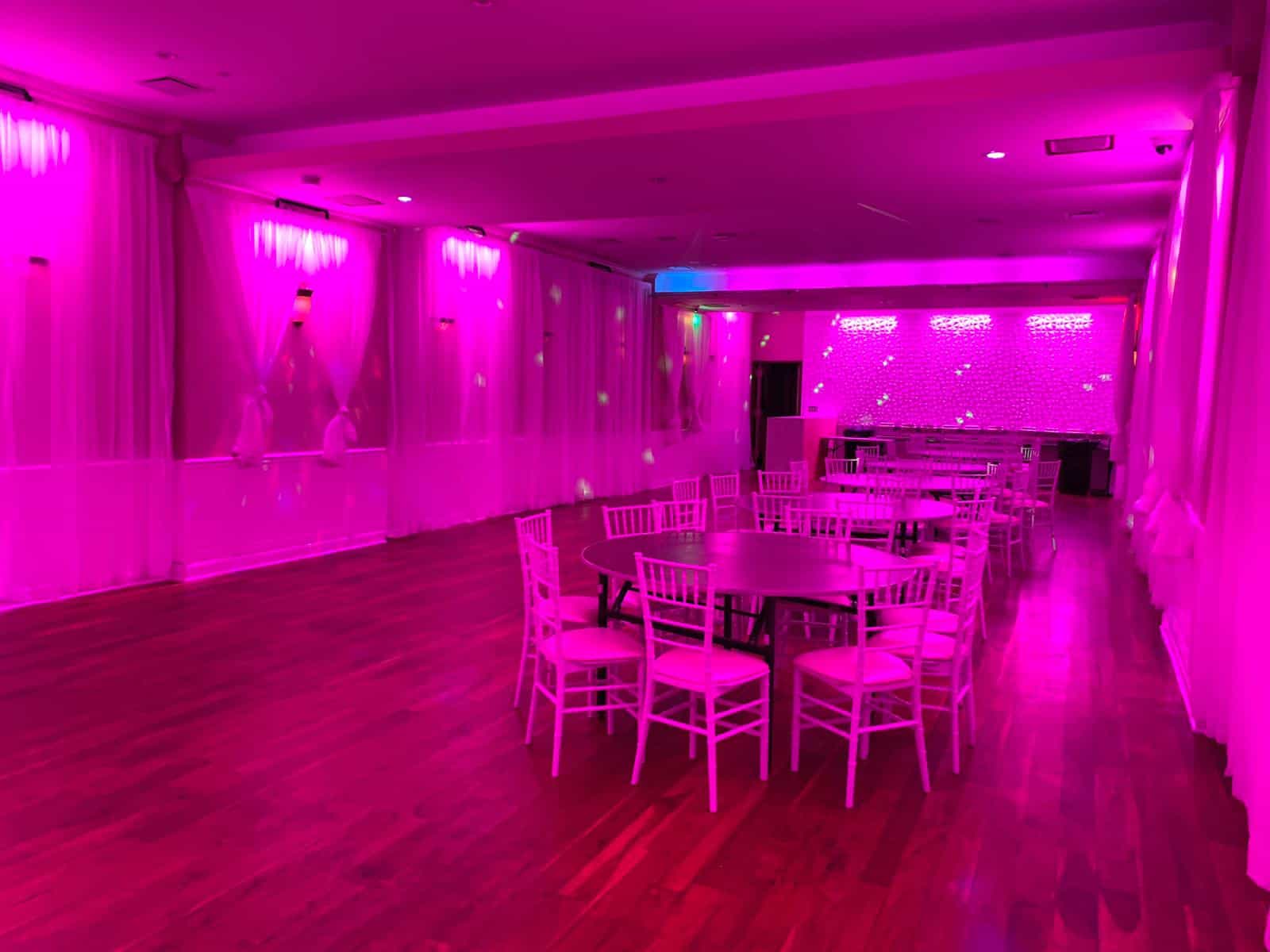
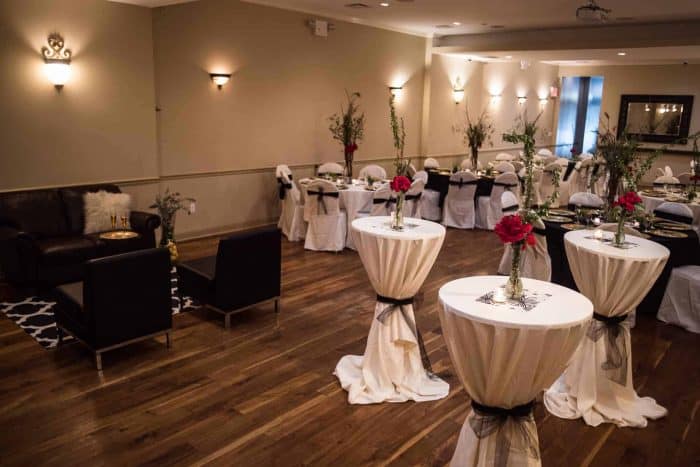
We include tables and chairs, dance lights, a disco ball, DJ booth, sound system, TV and internet, a bar area with refrigerator, and a staff member — all within your rental time. We tell you what’s included because we’d rather you know exactly what you’re getting than discover what you’re not getting after the fact. That’s been our approach for over 50 years, and it’s the reason our clients come back and refer their families and friends.
NYC Event Permits: What's Required and Who's Responsible
New York County has one of the most layered regulatory environments for events in the country. Depending on what your event involves — amplified music, food service, alcohol, outdoor structures — you may need permits from multiple city agencies before a single guest walks through the door.
This isn’t meant to intimidate you. It’s just the reality of hosting an event in New York County, and it’s something a venue with genuine experience in this city will already understand. The question to ask any venue you’re considering is simple: which permits are your responsibility, and which are ours?
Which NYC Event Permits Apply to Your Rental — and What They Cost
If your event includes amplified music — which most do — you’ll need a sound permit from the NYPD. That permit costs $45 per day and comes with restrictions: amplified sound is prohibited within 50 feet of any residential building and restricted within 500 feet of schools, courthouses, churches, and hospitals. In a dense city like New York County, that matters. A venue that’s been operating legally for decades has already accounted for these restrictions in how it runs events.
Food service has its own permit layer. If food is being served at your event by a caterer or outside vendor, a Temporary Food Service Establishment (TFSE) permit from the NYC Department of Health and Mental Hygiene may be required. That permit costs $70 annually, but it also requires a supervisor with a valid NYC Food Protection Certificate to be present on-site throughout the event. If you’re bringing an outside caterer, confirm they hold the necessary credentials before your event date.
Alcohol is regulated separately by the New York State Liquor Authority. If your event will involve alcohol service in a space that isn’t permanently licensed for it, a NYSLA special event permit is required — and applications must be submitted at least 15 days before the event. Missing that window means no alcohol service, full stop.
Any temporary structures — tents, canopies, stage platforms, or inflatables taller than 10 feet — require a permit from the NYC Department of Buildings. Generators for outdoor or temporary power also require separate approval. These are details that catch first-time event planners off guard, especially when they’re coordinating vendors who assume someone else is handling the paperwork.
The Certificate of Occupancy is the foundational permit that determines how many people a venue can legally hold and what types of events it can host. A venue operating without a valid CO — or hosting events that exceed its legal capacity — can be shut down on the spot. When you’re evaluating any event hall, asking to see the CO and confirming that your event type and guest count fall within its parameters is a reasonable and important step.
Event Insurance and Liability: What New York County Renters Often Overlook
Insurance is the part of the event planning conversation that most people skip until something goes wrong. In New York County, where venue contracts and liability exposure are more complex than in most markets, it’s worth understanding before you sign.
Many venues — particularly larger or newer ones — require renters to provide a Certificate of Insurance (COI) naming the venue as an additional insured party. This is a one-day event insurance policy that covers property damage, personal injury, and other liabilities that could arise during your rental. Costs vary, but one-day event policies are generally accessible and not expensive relative to the overall cost of an event. If a venue requires a COI and you show up without one, you may not be allowed to proceed.
Even when a venue doesn’t require a COI, carrying event insurance is worth considering. It protects you if a guest is injured, if a vendor causes damage, or if circumstances force a last-minute cancellation. Post-pandemic, more renters are treating event insurance the way they’d treat travel insurance — a modest upfront cost that covers a much larger potential loss.
For New York County residents planning events, liability exposure is consistent whether you’re hosting locally or traveling to nearby areas. The same insurance considerations apply across venues. We’ve been in continuous operation for over 50 years and have seen every scenario — and can walk you through what coverage makes sense for your specific event type, guest count, and setup.
ADA compliance is another area where renters sometimes don’t ask the right questions until it’s too late. All NYC event venues are required to meet ADA standards — accessible entry, restrooms, and accommodations for guests with mobility needs. Our venues are first-floor, street-level locations, which means no elevator dependency, no staircase surprises, and no guests left waiting outside while someone figures out an accessible route. That’s not an afterthought for us. It’s built into the physical design of every space we operate.
Choosing an Event Hall in New York County You Can Actually Trust
Contracts don’t have to be intimidating. Permits don’t have to be a mystery. The problems most renters run into aren’t inevitable — they’re the result of not knowing what questions to ask, and booking with a venue that wasn’t going to answer them honestly anyway.
What you’re really looking for in an event hall is straightforward: transparent pricing, a fair contract, a space that’s legally compliant, and a team that knows what they’re doing. Those things aren’t complicated to offer. They just require a venue that’s been around long enough to get them right.
We’ve been operating for over 50 years and serve families and businesses across New York County and the surrounding area. If you’re ready to talk through your event, check availability, or just ask a few questions before you commit to anything, reach out to us directly. We’re available seven days a week and happy to walk you through every detail before you sign a thing.