Summary:
If you’ve spent any time searching for wedding venues in New York County, NY, you already know the feeling. You find a space that looks right, ask about pricing, and the number you get back is just the beginning. By the time you factor in the service charge, the mandatory caterer, the setup fee, and the overtime clause buried in the contract, the original quote barely resembles the final bill.
That’s not a coincidence. It’s how a lot of venues in this market operate. The good news is there’s a different way to approach this — and it starts with knowing what to look for before you commit.
Budget-Friendly Wedding Venues: What the Price Actually Includes
The term “budget-friendly” gets used loosely in the wedding industry. A venue can advertise a low base rate and still end up costing more than a venue that charges more upfront but includes everything. The difference is almost always in what’s bundled and what’s billed separately.
Genuinely affordable venues charge a flat rate for the space, include tables, chairs, lighting, and basic amenities in that rate, and give you the freedom to bring your own vendors. That last part matters more than most couples realize. Mandatory preferred vendor lists — where the venue requires you to use their caterer, their DJ, or their bartender — can add thousands to a budget before you’ve made a single personal choice.
When you’re comparing options, the right question isn’t “what’s the rental fee?” It’s “what does the final number look like once everything is accounted for?”
Cheap Venues vs. Value Venues — and Why the Difference Matters
There’s a real distinction between a cheap venue and a value venue, and it’s worth understanding before you start touring spaces. A cheap venue gets you a low number on paper. A value venue gets you a low number that holds up when you actually add everything together.
In New York County’s wedding market, the gap between those two things can be significant. Traditional catering halls and hotel ballrooms often quote base rates that look reasonable — until you discover the $20-per-person room fee, the mandatory service charge, the cleanup deposit, and the clause that voids your rate if you go five minutes past your contracted end time. Couples who don’t read the fine print carefully can find their original quote inflated by 40 to 60 percent by the time the event is over.
What actually protects your budget is transparency. A venue that tells you exactly what’s included, exactly what’s optional, and exactly what you’ll never be charged for is worth more than a venue with a lower number that comes with asterisks.
We’ve operated in Brooklyn for over 50 years — long enough to know that the couples who feel best about what they spent are the ones who understood the pricing from the start. Our model is straightforward: you rent the space, you get the amenities included, and you bring whatever vendors and food you want. No mandatory packages, no preferred vendor requirements, no surprise line items at the end.
That’s not a selling point we invented. It’s a response to the way too many venues in this market operate, and it’s the reason families and couples keep coming back — and keep referring others.
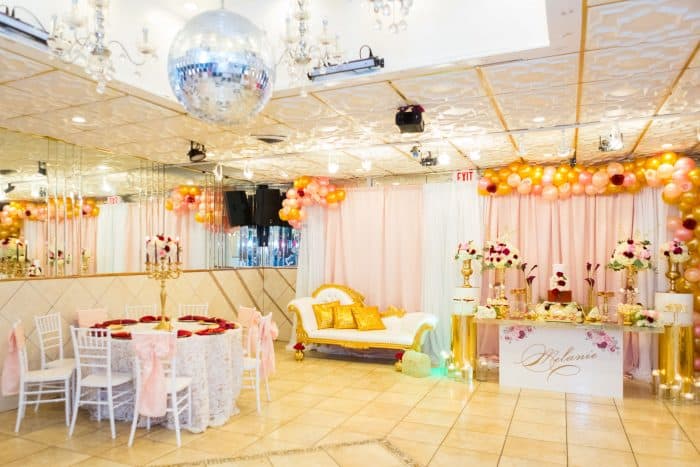
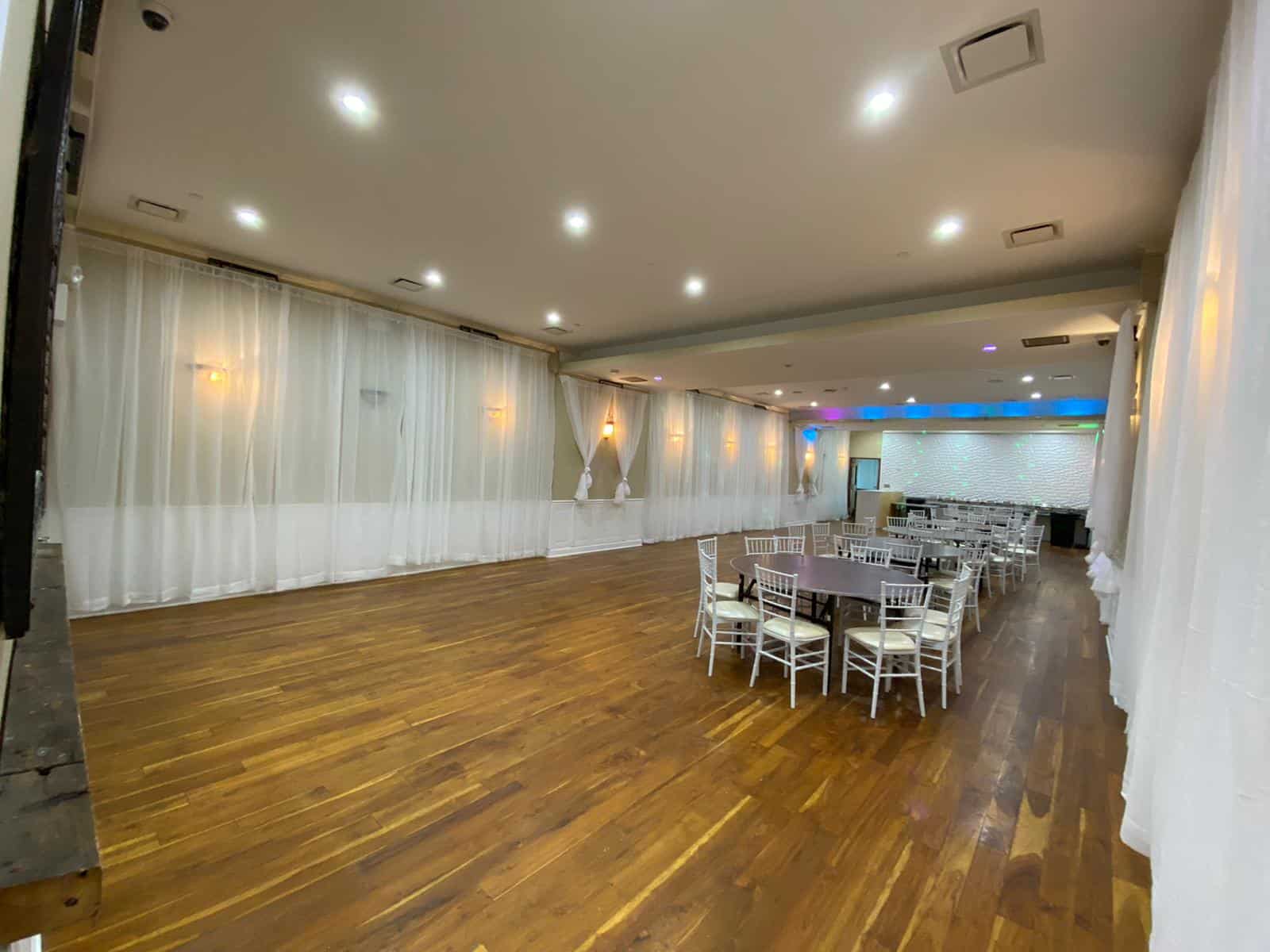
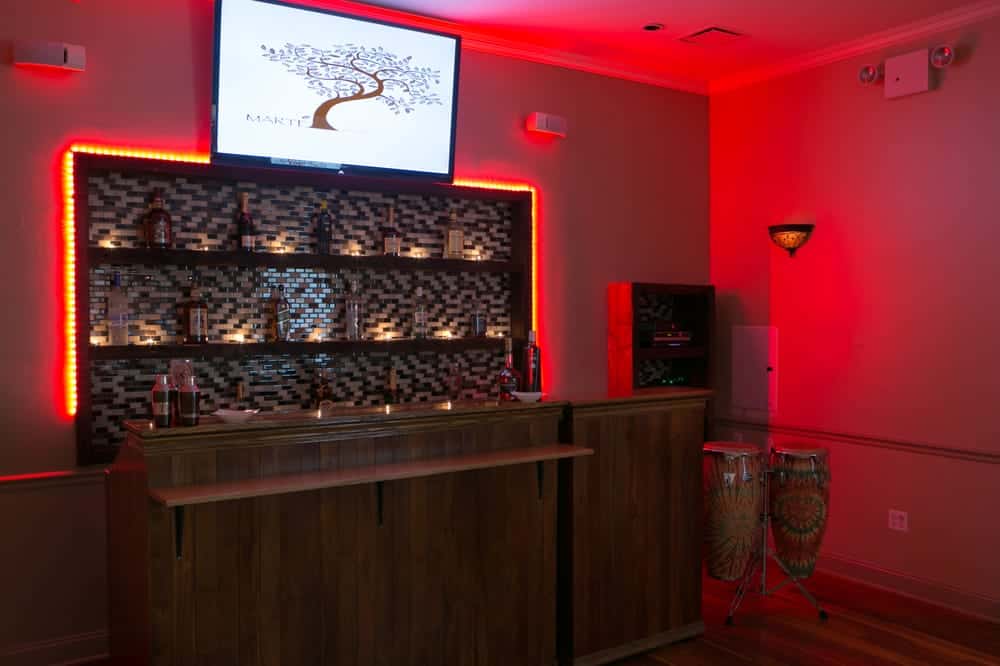
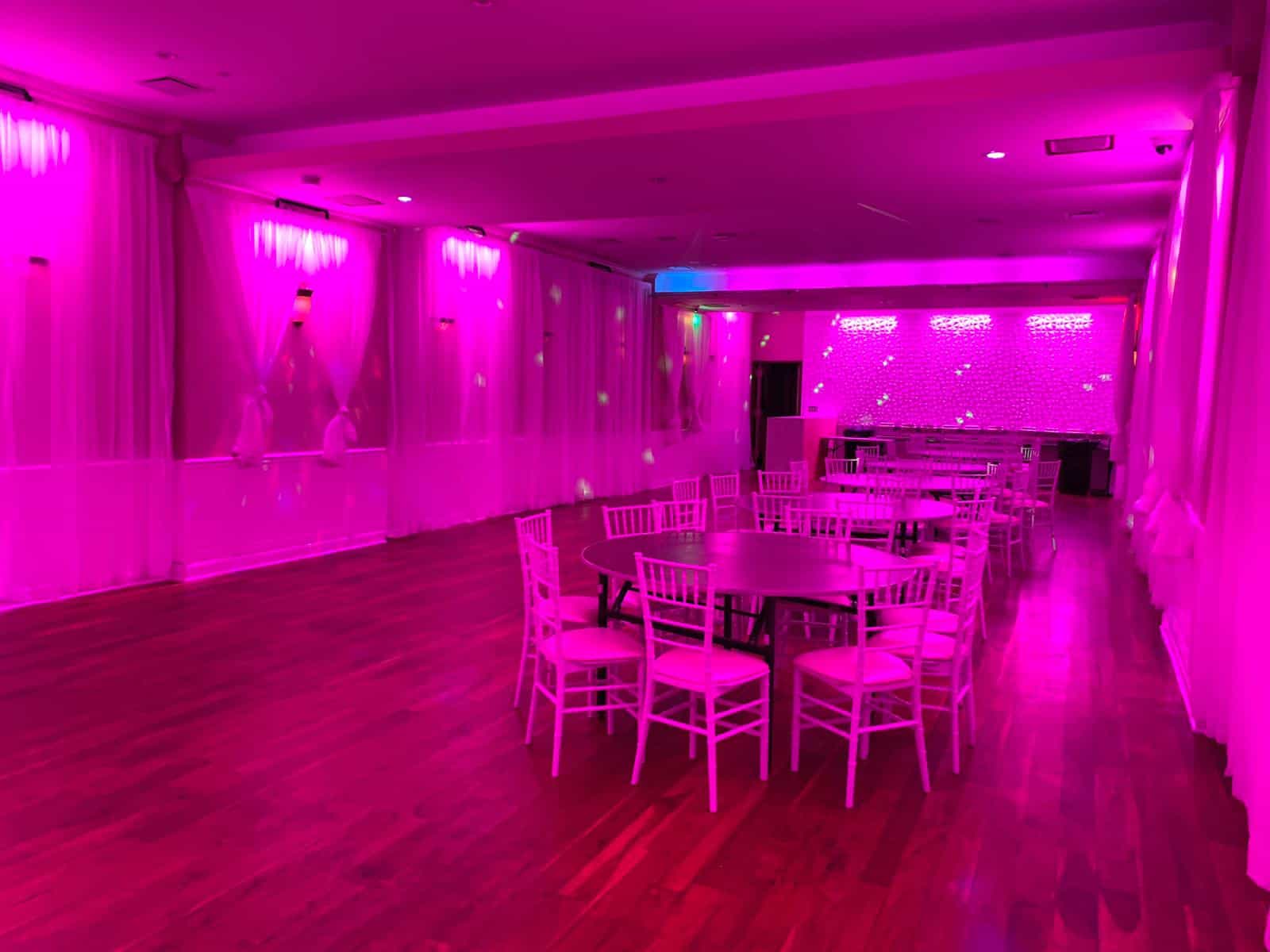
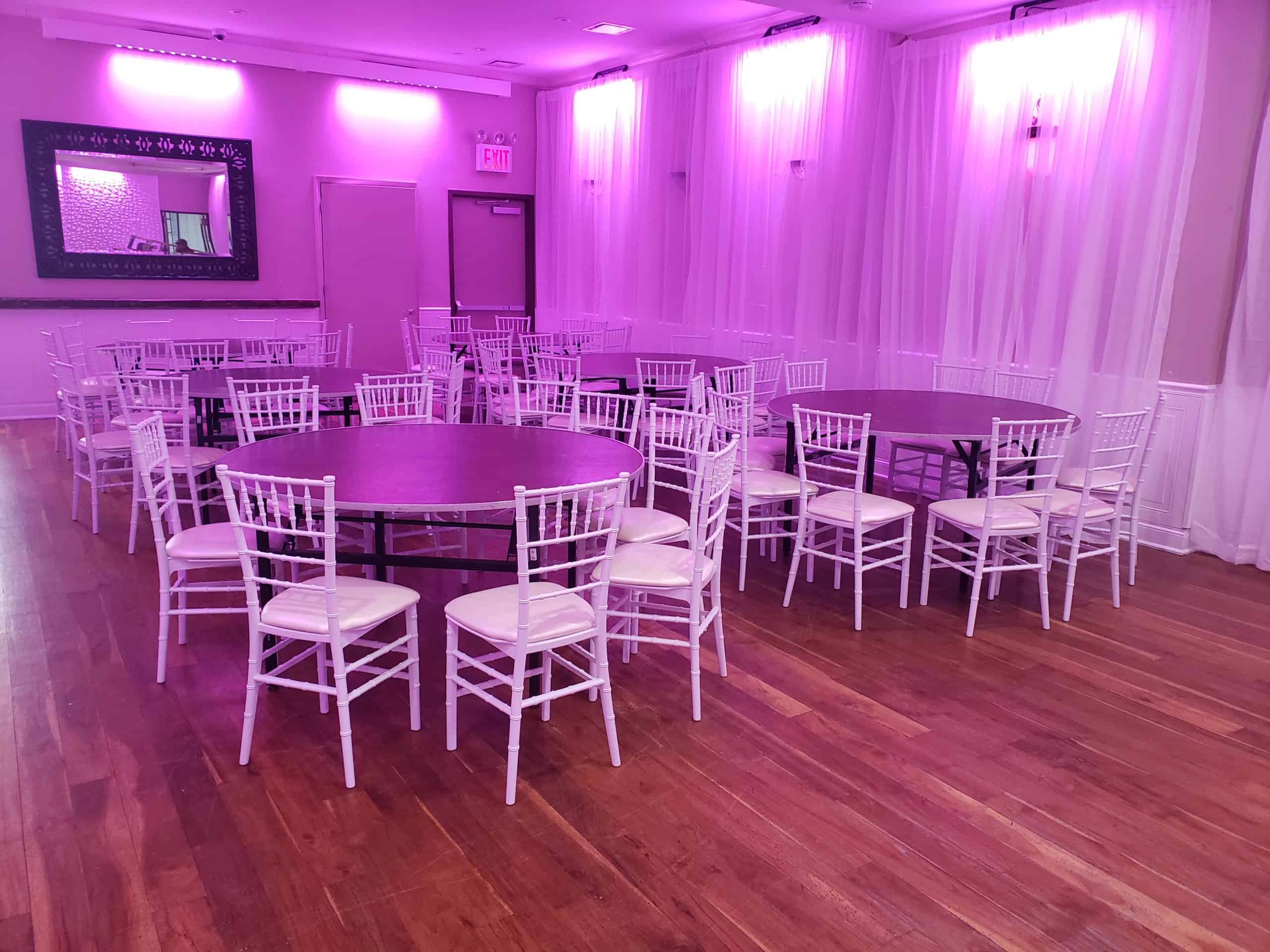
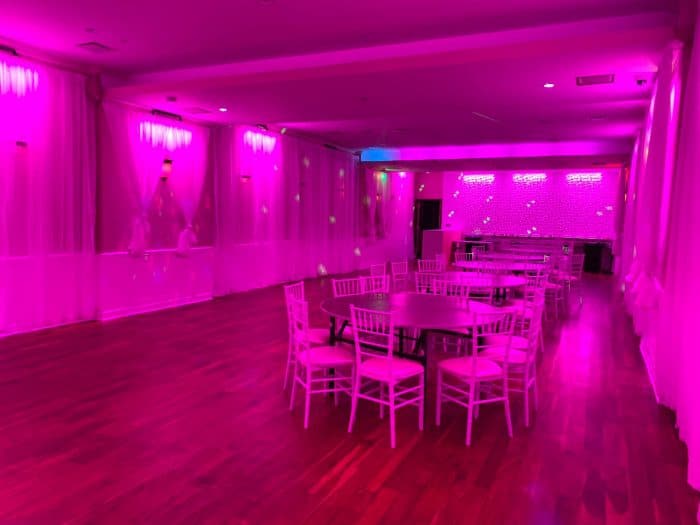
The other thing worth knowing is that “affordable” doesn’t have to mean outdated. We update our venues every year. Marte Hall, our East Williamsburg location, completed a full renovation in 2020 and now features new teakwood flooring, an illuminated bar, dynamic dimmable lighting, and 2,500 square feet of event space that seats up to 120 guests. It photographs well. It feels like a real event space. It just doesn’t cost what the boutique industrial venues two neighborhoods over charge — some of which start at $30,000 in rental alone.
Hidden Wedding Venue Costs to Watch for Before You Sign
Most couples don’t realize how many fees are negotiable — or avoidable — until they’ve already been burned by one. Here’s what tends to catch people off guard when booking venues in New York County.
Setup and cleanup fees are often listed separately from the rental rate, even when the venue’s marketing implies they’re included. Some venues charge $100 to $300 just for the time it takes to arrange tables and clear the space after the event. Others start the rental clock the moment you walk in, meaning your “five-hour” event is really four hours of actual party time once you’ve set up.
Security deposits are standard — typically $300 to $800 — but the conditions for getting them back vary widely. Some venues have vague language around “excessive cleaning” or “damage” that gives them wide latitude to keep part of your deposit regardless of how the event goes.
Per-person room fees are common at traditional catering halls and hotel venues. You’re charged for the headcount, not just the space — which means inviting 100 guests instead of 80 costs you more even if the room size doesn’t change. That model makes it very difficult to control costs as your guest list evolves.
Overtime penalties are where a lot of couples get hit hardest. Events run long. That’s just how celebrations work. But some venues charge steep per-hour overtime rates — sometimes $500 or more — for going past the contracted end time, even by thirty minutes.
We separate setup time from event time because we’ve seen what happens when venues don’t. Couples spend the first hour of their rental arranging chairs instead of enjoying the space they paid for. Our rental includes dedicated setup time on top of your five hours of event time, so the clock doesn’t start until your guests arrive.
The simplest advice we can offer: before you sign anything, ask the venue to walk you through every possible charge on the final invoice. If they hesitate or the answer gets complicated, that tells you something.
Brooklyn vs. Manhattan Wedding Venue Costs: What the Numbers Actually Show
For couples based in New York County, the instinct is often to look for venues in Manhattan first. It’s where you work, where you live, where you picture the event. But Manhattan venue pricing operates in its own stratosphere. What the borough considers “affordable” is frequently out of reach for couples working with a real-world budget.
The comparison becomes stark quickly. Manhattan venues that market themselves as mid-range options often start at $10,000 to $15,000 for the space alone — before food, music, florals, or anything else. Premium venues in Tribeca, the Meatpacking District, or Midtown can push $30,000 to $50,000 in rental fees without blinking.
East Williamsburg is a 20-minute subway ride from Midtown Manhattan. The L train from 14th Street and Union Square gets your guests there directly. The J, M, and Z trains offer additional access from Lower Manhattan and Queens. For guests driving in from Long Island or New Jersey, the BQE and the Williamsburg Bridge make the trip straightforward — and unlike most Manhattan venues, there’s actually parking nearby.
Why New York County Couples Are Booking Wedding Venues in East Williamsburg
The shift has been gradual but real. Couples who live or work in New York County are increasingly looking to Brooklyn — specifically the East Williamsburg and Bushwick corridor — for event spaces that deliver the aesthetic and experience of a Manhattan venue without the price that comes attached to a Manhattan zip code.
Part of it is practical. East Williamsburg sits on the Brooklyn-Queens border, which makes it genuinely accessible for guests coming from multiple directions. Someone traveling from Washington Heights in upper Manhattan, from Astoria in Queens, or from Crown Heights in Brooklyn can all get there without a complicated commute. That geographic flexibility is something most Manhattan venues can’t offer — you’re either close to one transit hub or you’re not.
Part of it is also about what you get for the money. A couple spending $15,000 on a Manhattan venue might get a 1,200-square-foot space with limited setup time and a mandatory catering package. That same budget, directed toward an East Williamsburg venue, can cover the space rental, leave room for a caterer of your choosing, a DJ you actually want, decorations that reflect your taste, and still come in under what the Manhattan option would have cost for the room alone.
We’ve hosted couples from across New York County — from Inwood to the Lower East Side — who made the trip across the bridge and were genuinely surprised by what they found. The neighborhoods have changed. The venues have changed. East Williamsburg isn’t a compromise; it’s a deliberate choice that tends to stretch a wedding budget further than almost anywhere else in the city.
We’ve been part of this community for over 50 years, which means we’ve seen the neighborhood evolve and we’ve adapted with it. Our venues are updated annually — not because we have to, but because the couples who book with us deserve a space that feels current, not like a time capsule.
What to Look for in a Budget Wedding Venue That Won't Let You Down
Once you’ve narrowed your search to venues that fit your price range, the next question is which ones are actually worth trusting. Budget venues vary enormously in quality, reliability, and how they treat you on the day of your event. Here’s what tends to separate the good ones from the ones you’ll regret.
Longevity matters more than most couples factor in. A venue that’s been operating for decades has something to prove beyond a flashy website — it has a track record. In a city where event spaces open and close constantly, a business with 50-plus years of operation has earned that through consistent service and community trust. That’s not something a venue that opened two years ago can replicate, regardless of how good their Instagram looks.
Ownership structure matters too. Family-owned venues tend to operate differently than corporate-managed ones. There’s more personal accountability. The person you talk to on the phone is often the same person who’s invested in making your event go well, not a rotating staff member reading from a script. When something comes up — and something always comes up in event planning — that personal investment is the difference between a problem that gets solved quickly and one that gets passed around.
Accessibility is worth thinking about more carefully than most couples do. If you have elderly relatives, guests with mobility challenges, or family members who rely on transit, those logistics shape the experience for people who matter to you. We operate first-floor, handicap-accessible locations because we’ve seen how much it means to families when everyone can actually participate comfortably. We’re also near multiple subway lines and major highways, with parking available — which is not something you can take for granted in New York County.
Finally, reviews. Not star ratings — actual written reviews where people describe what happened. Look for specifics: did the staff show up prepared, was the space as advertised, did anything go wrong and how was it handled? Video testimonials carry even more weight because they’re harder to manufacture. We actively encourage couples to share their experiences, and we make those testimonials easy to find, because we know that’s how trust actually gets built.
Finding a Budget Wedding Venue in New York County That's Worth It
The search for a budget wedding venue in New York County doesn’t have to end in frustration or compromise. What it requires is knowing where to look, what questions to ask, and what red flags to walk away from. Transparent pricing, vendor flexibility, a well-maintained space, and a team that’s actually invested in your event — those things exist in this market. They’re just not always where you’d expect to find them.
East Williamsburg is minutes from Manhattan, accessible from across New York County, and home to event spaces that have been serving Brooklyn families and couples for generations. The price difference compared to Manhattan venues is real and significant. So is the quality.
If you’re in the comparison phase and want to see what’s actually available — and what it actually costs — we’re a good place to start that conversation.